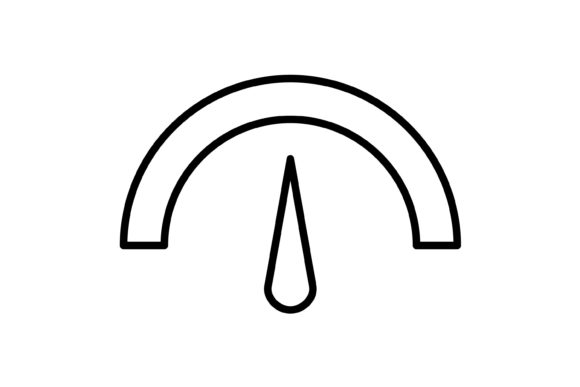
Gauge Outline Icon: A Clear Choice for Modern Design Projects
When you're building a brand, an app, or a presentation, the smallest details often make the biggest difference. The Gauge Outline Icon is one of those details. It’s not just a symbol; it's a versatile design asset that communicates measurement, progress, performance, and precision at a glance. This clean, vector-based icon is designed for clarity and adaptability, making it a reliable tool for anyone from a solo entrepreneur to a seasoned designer working on a complex interface.
Understanding the Visual Language of the Gauge Icon
The power of the Gauge Outline Icon lies in its simplicity. As a line icon, it uses minimal strokes to define its form, avoiding heavy fills or unnecessary detail. This gives it a modern, professional, and somewhat technical personality. It feels clean and trustworthy, which is exactly the impression you want when you're displaying data, settings, or performance metrics. Its style is universally recognizable, bridging language barriers and ensuring your audience understands its meaning instantly.
This icon isn't about artistic flair; it's about functional clarity. It’s designed to work seamlessly within a larger visual system, whether that's a mobile app dashboard, a website's user interface, or a printed report. Its strength is in its restraint, allowing it to support your content without competing for attention.
Where This Icon Truly Shines: Practical Applications
The real value of any design asset is measured by how often and where you can use it. The Gauge Outline Icon excels across a wide range of projects, thanks to its included file formats (AI, EPS, JPG, PNG with transparent background, and SVG). This flexibility means you're never stuck converting files or struggling with compatibility.
- Digital Interfaces & Mobile Apps: This is the icon's natural habitat. Use it for settings menus, speed indicators, volume controls, or to represent system performance. Its SVG format ensures it scales perfectly on any screen, from a smartwatch to a 4K monitor, staying crisp and clear.
- Web Design & Social Media Graphics: In web design, it can guide users through a process, indicate a "meter" for something like storage used, or simply add a clean visual element to a blog post about efficiency. For social media, it can instantly convey concepts like "boost your performance" or "measure your results" in a post or story graphic.
- Print & Editorial Design: In print, its vector nature is key. Use it in annual reports, brochures, or magazine layouts where you need to illustrate a point about metrics or settings. It will print sharply at any size, maintaining its professional look.
- Presentations & Templates: A well-designed presentation uses consistent, high-quality graphics. The Gauge Outline Icon can be a recurring visual motif in slides discussing KPIs, project phases, or system controls, reinforcing your message with professional consistency.
- Branding & Logo Design: While a full logo might be more complex, an icon like this can be a powerful element within a broader brand identity system. Think of the settings icon for a software company or a subtle detail in a logo for a consulting firm focused on business metrics.
Making It Work: A Practical Guide for Your Project
Choosing the right icon is just the first step. Using it effectively is what elevates your work. Here’s how to think about integrating the Gauge Outline Icon into your projects.
Evaluating Fit and Context
Before you drop the icon into your design, ask yourself: does its visual weight match the rest of my design assets? If your project uses bold, filled graphics, a thin outline icon might look out of place. Conversely, if your aesthetic is minimalist and clean, this icon will fit right in. Consider the overall brand identity you're building. For a tech startup, it feels innovative. For a financial report, it feels precise and reliable.
Testing Font Pairings and Readability
Icons don't exist in a vacuum. They work alongside typography. If you're placing the Gauge Outline Icon next to text—like in a button or a label—ensure there's enough visual breathing room. The line weight of the icon should complement the weight of your chosen typeface. A very thin icon might get lost next to a heavy serif font, while it could pair beautifully with a clean sans serif font. Always test the pairing at the actual size it will be used to check for clarity and visual balance.
Leveraging the File Formats
The included formats are your toolkit for different scenarios:
- AI & EPS: These are your editable masters. Use them in Adobe Illustrator to customize the icon—change the stroke weight, color, or adjust the shape to better fit your specific logo design or packaging design needs.
- SVG: This is the hero format for the web and digital applications. It's lightweight, scalable, and can be styled with CSS, making it perfect for responsive web design and interactive elements.
- PNG (Transparent Background): Ideal for quick use in presentations, social media graphics, or any context where you need to place the icon over a colored background without a white box around it.
- JPG: Useful for when you need a simple, non-transparent image for a blog post or email, though the PNG is generally more versatile for design work.
Ultimately, the Gauge Outline Icon is more than just a decorative element. It's a functional piece of modern typography and visual communication. By understanding its strengths and applying it thoughtfully, you can enhance usability, reinforce your message, and add a layer of professional polish to any project, whether it's a personal craft or a commercial brand identity system. It’s a small asset that can help make your work clearer, more consistent, and more engaging for your audience.